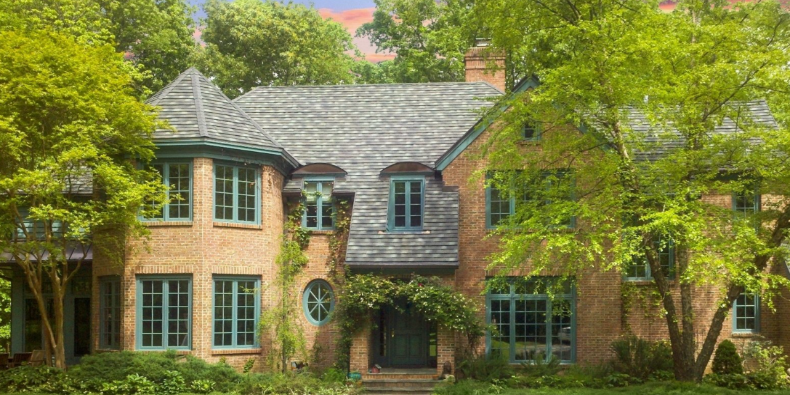
If you’ve been hearing talk of a hotter-than-average summer coming this year, you’re probably wondering how your home will weather the heat. It might surprise you to learn that your roof plays a key role in summertime cooling. In fact, you can save significantly on air conditioning and ventilation costs by choosing the right roofing material. But which type of roof is better at keeping homeowners cool when the mercury climbs?
How Heat Transfer Affects Your Roof
Before you can compare a metal roof vs. asphalt shingles, it’s important to understand the science behind how your roof performs in hot weather. This will not only help you choose the right roofing material, but also influence how you ventilate your attic and budget for summertime cooling.
Adequate hot-weather cooling may be more crucial than ever this summer. Meteorologists are predicting a super El Niño. That means a greater potential for higher-than-normal temperatures and severe storms.
There are three basic ways that heat affects a roof:
- Solar reflectance: how well the material reflects the sun’s rays
- Thermal emittance: how the roof releases heat once it has been absorbed
- Insulation: how well the roof holds onto heat overall
It’s similar to looking at paving around, say, a swimming pool in summer. Have you ever stepped onto a hot terracotta paver or brushed a concrete surface in the height of the afternoon? You may have felt like it was about to burn the bottoms of your bare feet. That surface had absorbed the sun's heat and held onto it, getting hotter and hotter as the day went on. Not very comfortable, was it?
In contrast, you might have done the same thing at a pool with white limestone pavers. While this surface was slightly warm, it wasn’t as hot as the other pool. You could comfortably walk barefoot from your chaise lounge to the edge of the pool. That’s because this type of paving stone has high solar reflectance, good thermal emittance, and a low insulating ability.
You want those same qualities in your roof if you live in a very hot area for most of the summer.
Metal Roof vs. Asphalt Shingles: How Each Performs in Heat
If you're looking for a roof that can withstand high temperatures, it's important to compare how different roofing materials manage heat. Solar reflectance, thermal emittance, ventilation, and installation methods all influence how much heat reaches your home. Here's how metal roofing compares with both conventional and cool roof asphalt shingles.
Asphalt Shingles
Traditional asphalt shingles absorb a significant amount of solar heat, causing roof surface temperatures to rise well above the surrounding air temperature on sunny days. Because conventional asphalt has relatively low solar reflectance, it retains heat and can continue radiating it into the attic after sunset, increasing cooling demands during extended periods of hot weather.
However, not all asphalt shingles perform the same. Many manufacturers now offer cool roof asphalt shingles that use specially engineered reflective granules to increase solar reflectance and reduce roof surface temperatures. These products can help lower attic temperatures and improve energy efficiency compared to standard asphalt shingles, particularly when they meet local cool roof requirements.
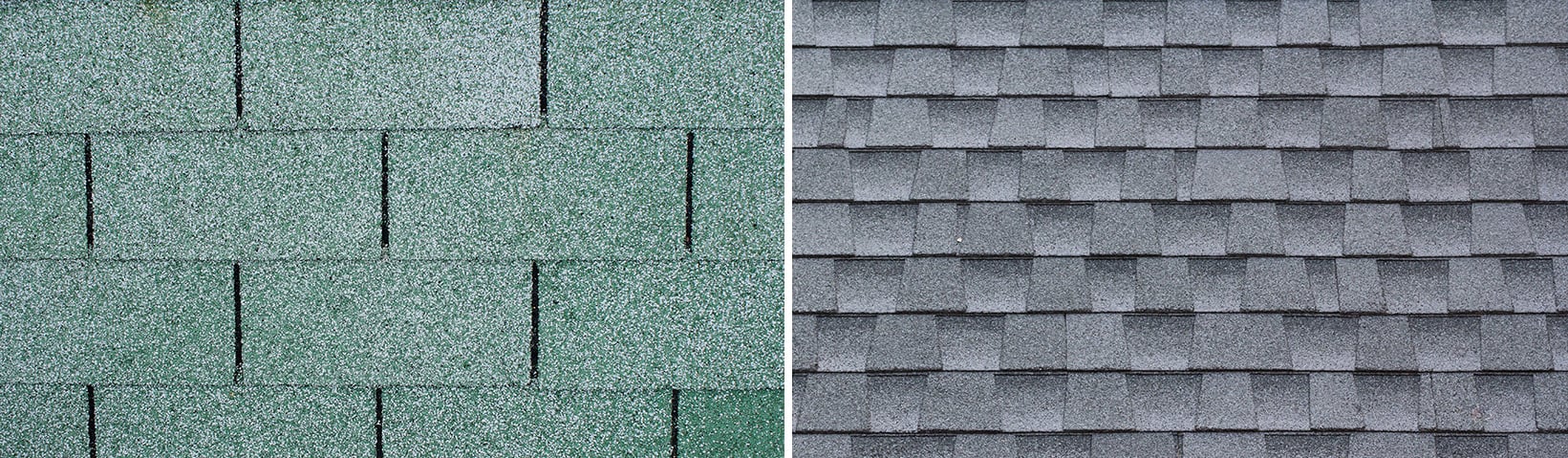
Even so, cool roof asphalt shingles generally do not reflect as much solar energy as many metal roofing systems. They also do not provide the same installation benefits as certain metal roof systems that create an air space between the roof covering and the roof deck.
Beyond thermal performance, asphalt shingles remain a popular choice because they typically have a lower initial cost, are widely available, and can be installed by most roofing contractors.
Metal Roofing
Metal roofing is designed to minimize heat gain by reflecting more of the sun's energy than many conventional roofing materials. Stone-coated metal roofing combines high solar reflectance with high thermal emittance, allowing the roof to reflect more sunlight while releasing absorbed heat more efficiently.
Many stone-coated metal roofing systems are installed over battens, creating an air gap between the roof covering and the roof deck. This additional ventilation can further reduce heat transfer into the attic, improving overall thermal performance.
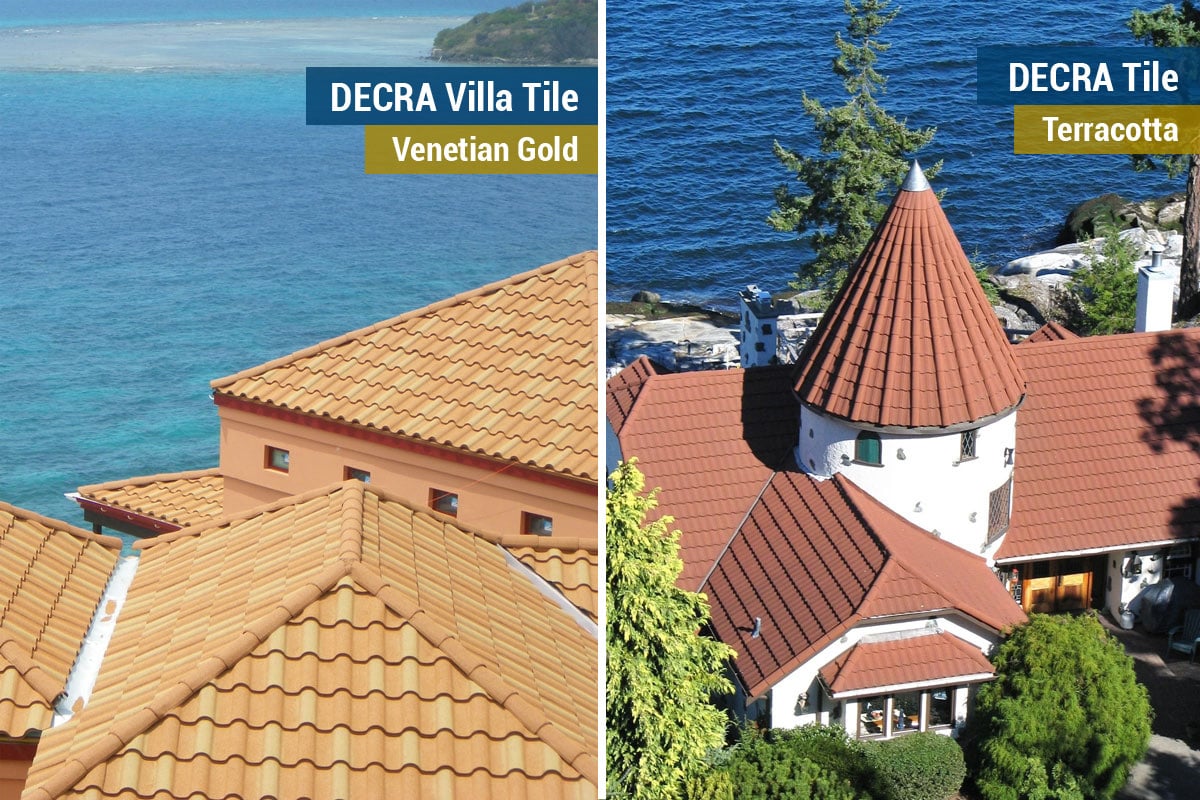
Because of these combined characteristics, properly designed metal roofing systems can help reduce cooling energy use compared to many conventional roofing materials. Actual energy savings vary depending on the roofing product, color, ventilation, insulation levels, climate, and the home's overall design.
Even homeowners who prefer darker roof colors may find that many modern metal roofing products maintain strong thermal performance through advanced coatings and engineered finishes.
How to Choose Between Metal and Asphalt
Both metal roofing and asphalt shingles can perform well in warm climates when the right products are selected. The best choice depends on your budget, climate, long-term goals, and performance priorities.
When Is a Metal Roof the Best Option?
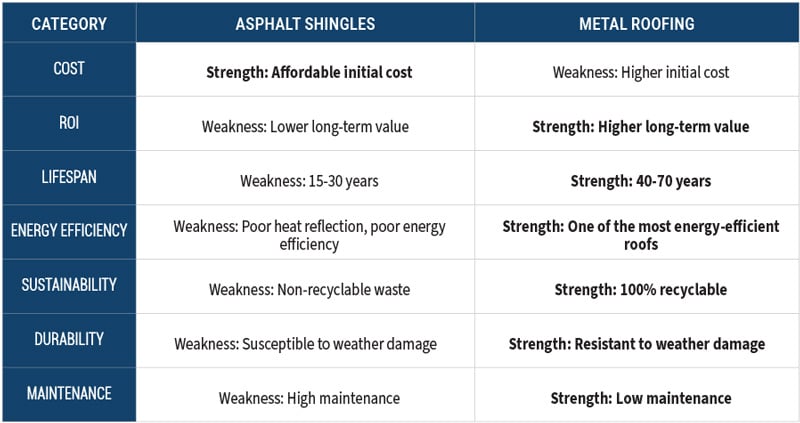
Metal roofing may be the better investment if:
- You live in a hot climate and want maximum long-term energy efficiency.
- You plan to stay in your home for decades and want a roof that can last two to three times longer than conventional asphalt shingles.
- Your area experiences frequent hail, high winds, hurricanes, or tornadoes, and you want a roofing system with excellent impact and wind resistance.
- You live in a wildfire-prone region and want a noncombustible roofing material.
- You're looking for a roofing system that may qualify for insurance discounts, where available.
- Your home has experienced ice dams and could benefit from roofing systems designed to improve ventilation and reduce freeze-thaw issues.
- You have or plan to install solar panels and want a durable, lightweight roofing system that performs well in high temperatures.
For homeowners primarily concerned with reducing heat gain at the lowest upfront cost, cool roof asphalt shingles may also be worth considering. While they generally do not offer all of the durability, longevity, or ventilation advantages of metal roofing, they can provide meaningful improvements in thermal performance over conventional asphalt shingles.
DECRA by IKO Metal Roofing Will Help Keep Your Home Cooler This Summer
Is stone-coated metal roofing the right choice for your home? If so, DECRA should be at the top of your list.
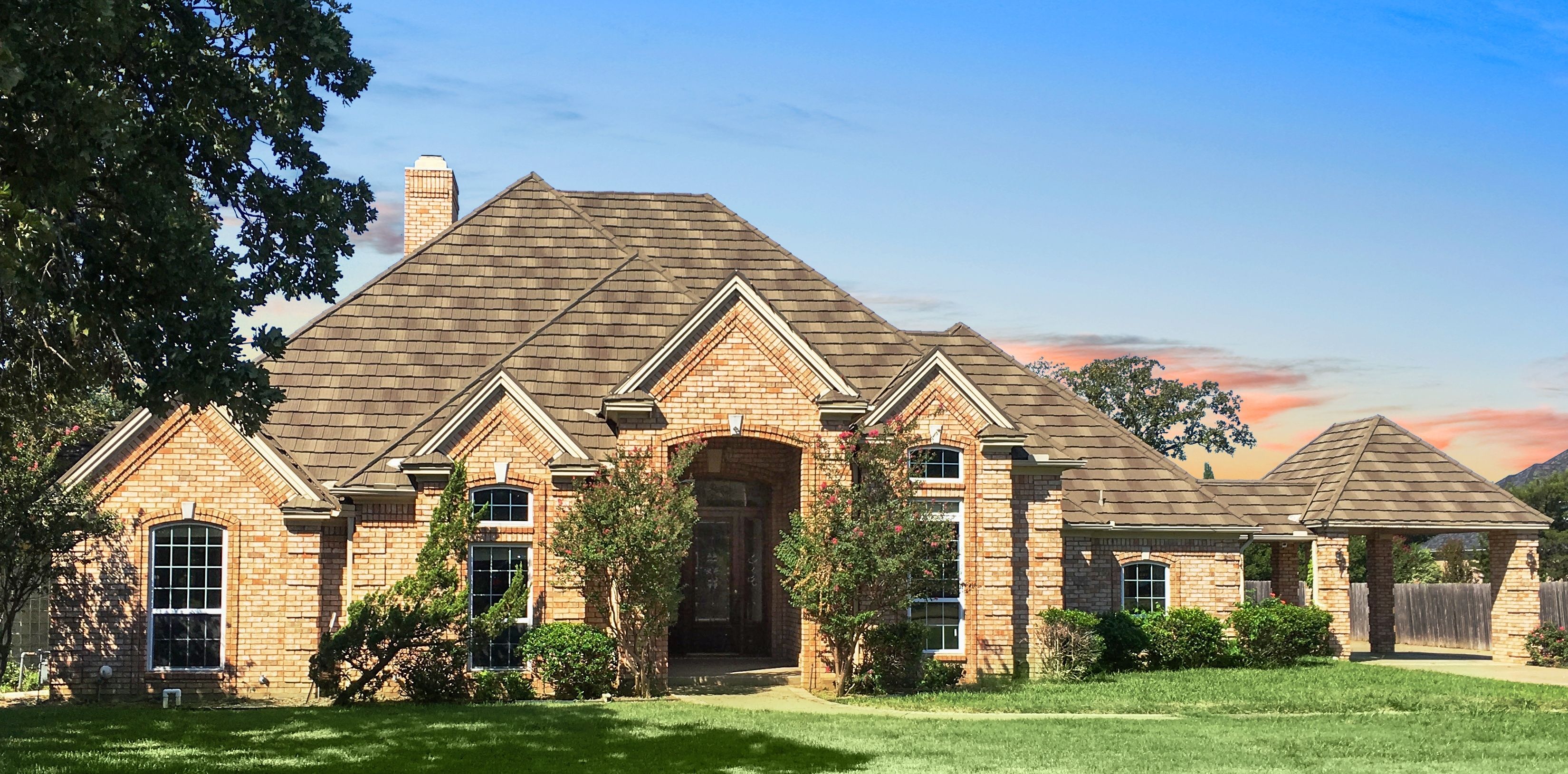
DECRA by IKO metal roofing meets all the criteria listed above, including reducing cooling costs through its innovative engineering. It comes in an array of hues and in profiles that mimic traditional shingles, tiles, and shakes to match any home’s style.
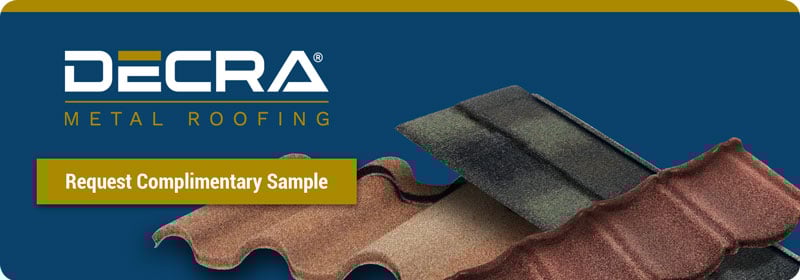
Ready to see and feel the DECRA by IKO difference? Request a complimentary sample today.